
How often should you have your chimney swept is one of the most common questions homeowners ask, and the honest answer is that it depends on how you burn. Here is a clear way to think about it, along with the warning signs that mean you should not wait for the calendar.
Frequency comes down to how much you burn and how fast creosote builds. The U.S. Fire Administration highlights heating equipment as a major fire cause, and our guide to creosote and prevention covers the details. When it is time, our chimney cleaning handles it.
The short answer: at least once a year
If you burn wood in a fireplace or stove, the guidance most chimney professionals follow is simple. Have the chimney looked at by a professional at least once a year, and swept whenever a real layer of creosote or soot has formed inside the flue. This yearly rhythm references the safety principles published by the National Fire Protection Association, which treats an annual visit as the sensible baseline for a home that burns wood. Creosote builds quietly, and it is easy to underestimate from the comfort of the living room.
Once a year is a floor, not a ceiling. Some households need more frequent sweeping, and a few need less. The right schedule depends on how you actually use the fireplace, not on a single number that fits every home.
What really drives how often you need a sweep
Four things shape how quickly creosote gathers in your flue:
- How much you burn. A household that lights a fire most winter evenings builds creosote far faster than one that burns a few times a season.
- The wood you burn. Damp or unseasoned wood smolders, makes more smoke, and leaves heavier deposits. Dry, well seasoned hardwood burns much cleaner.
- How you run the fire. A slow, smoky, air starved fire coats the flue quickly. A hot, bright fire with good airflow burns cleaner and leaves less behind.
- Draft and flue condition. A cool flue, a short chimney, or an older clay lined flue with rough spots gives creosote more places to cling.
The quarter inch guideline
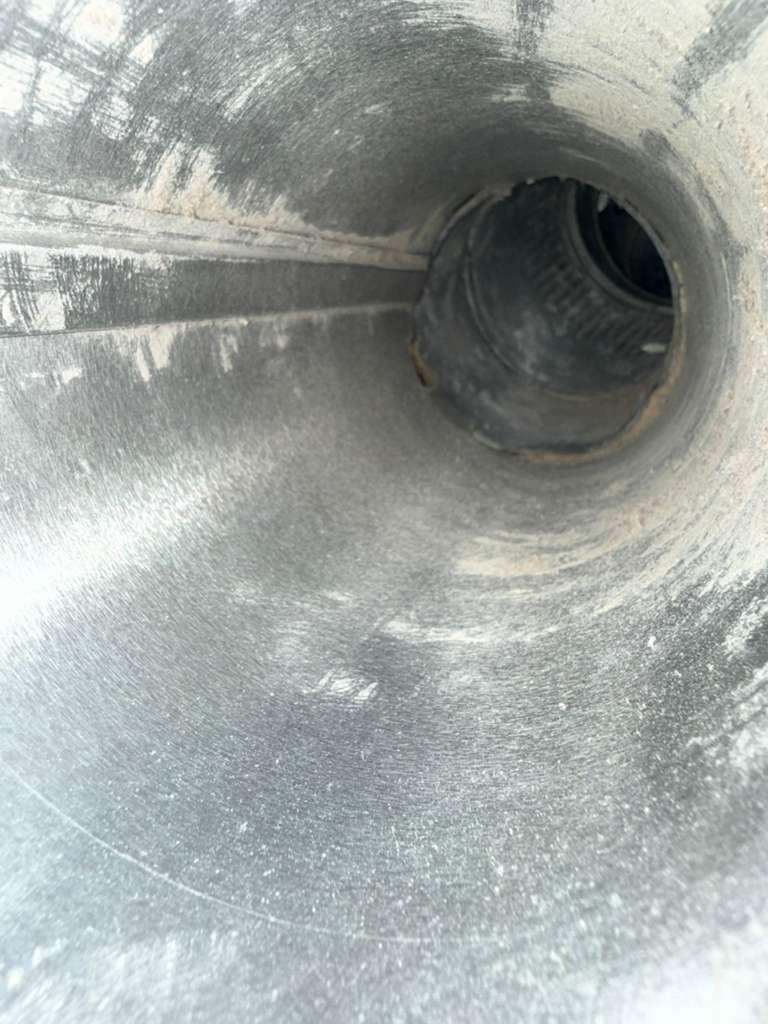
A practical rule many sweeps use: once creosote reaches about a quarter inch thick anywhere in the flue, clean it before you burn again, because that much buildup can feed a flue fire. You usually cannot judge this from below, which is why a professional chimney sweep pairs the cleaning with a close look at the flue.
Why an annual inspection matters even if you rarely burn
Even a chimney that sees little use deserves a yearly visual check. Birds, squirrels, and leaves can block a flue over a quiet summer, and moisture from our humid climate can wear at masonry. A visual chimney inspection helps identify visible concerns such as blockages, nests, or a weak draft before they turn into a problem. Inspection and sweeping are different jobs: the inspection tells you what is going on, and the sweep removes what should not be there.
Signs you should not wait for the calendar
- A strong, tarry, or smoky smell from the fireplace, especially in damp weather.
- Smoke pushing back into the room instead of drawing up the flue.
- Dark, flaky, or shiny deposits around the damper or firebox.
- Fires that are hard to start or that burn weakly and slowly.
These point to buildup or a draft problem that regular cleaning helps reduce.
Chimney care for Maryland homes
Our humid Mid Atlantic climate makes annual care especially worthwhile. Damp summers push moisture into masonry, and a long cold burning season lays down creosote week after week. Many homes around Montgomery County also have older masonry chimneys with clay flue tiles, where rough, aging surfaces give creosote more to hold onto. SafeFlow sweeps chimneys for homeowners across the county, from Silver Spring to Bethesda and beyond, and we match the schedule to how each household actually uses its fireplace.
Setting your own schedule
A simple plan: book your sweep and inspection in late summer or early fall, before the first cold snap sends everyone looking for an appointment at once. If you burn most nights, ask about a midseason check as well. If you burn rarely, an annual visual inspection with a sweep only when buildup is present is usually enough. Either way, a regular chimney cleaning keeps the system drafting well and helps reduce avoidable risk before winter. The goal is not a fixed number for every house. It is matching the care to the way you burn, with at least one professional visit a year as the anchor.
What happens during a professional sweep
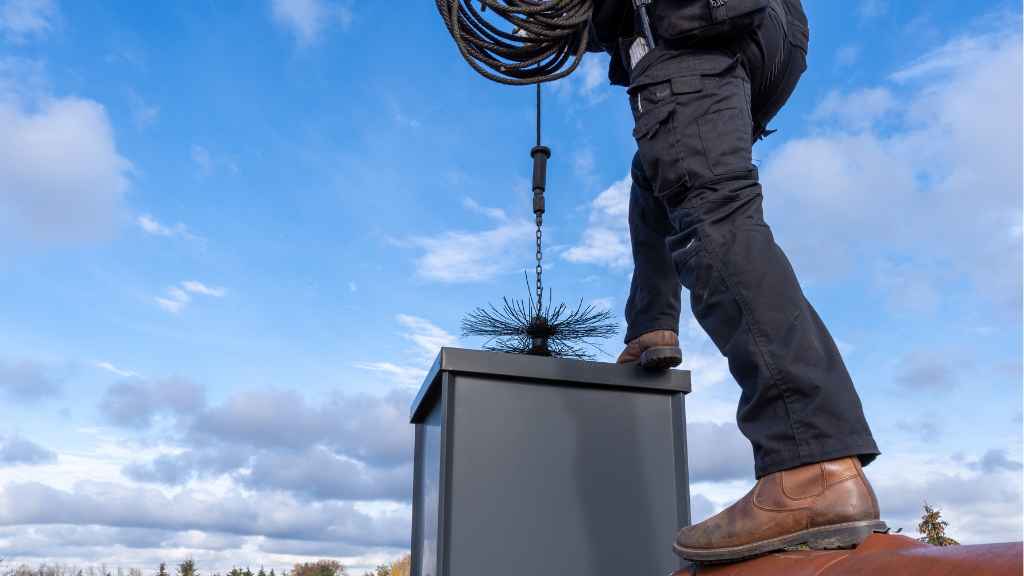
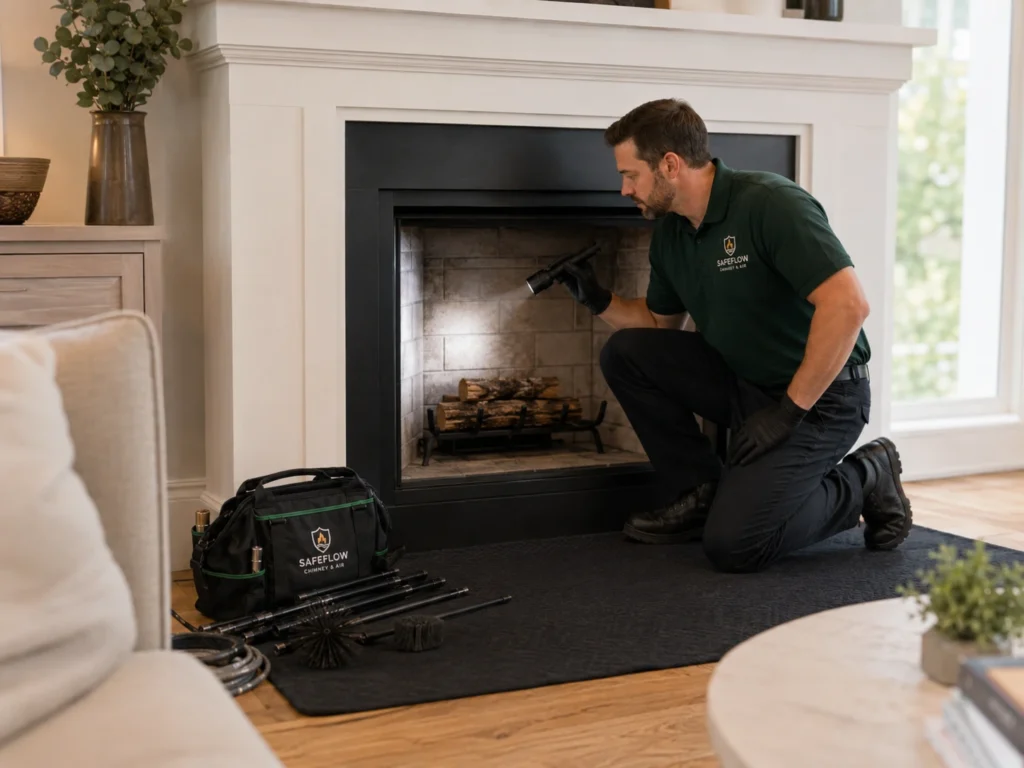
Knowing what to expect makes the visit easy. A professional sweep begins by protecting your home, laying sheeting around the hearth and setting up a HEPA vacuum to keep soot contained. Using brushes and rods sized to your flue, the technician works the creosote and soot loose from the accessible flue and firebox, then captures the debris rather than letting it drift into the room. Before finishing, a good sweep takes a careful look at the firebox, damper, and flue and explains what was found in plain language. The process is tidy, and a well run visit leaves your living space as clean as it was found.
Wood stoves and inserts need attention too
It is not only open fireplaces that need a sweep. Wood stoves and fireplace inserts often run hotter and are used more steadily through the season, so their flues collect creosote just as readily. The connecting pipe and the flue both deserve a yearly look. If you heat with a stove most of the winter, ask about a midseason check, since heavy use can call for more than one cleaning. The principle is the same across the board: match the care to how much you burn, and let a professional confirm when the flue is ready for another round.
Keeping a simple record
One easy habit makes future decisions simpler. Jot down the date of each sweep and any notes the technician shares. Over a couple of seasons you will see your own pattern, how fast buildup forms for the way you burn, which makes it easy to plan the right interval. A short note on your phone is enough, and it turns chimney care from a guess into a routine.