


A clogged dryer vent rarely announces itself, but it does leave clues. Catching them early protects your home, since trapped lint and heat are a leading cause of dryer fires. Here are the six signs to watch for.
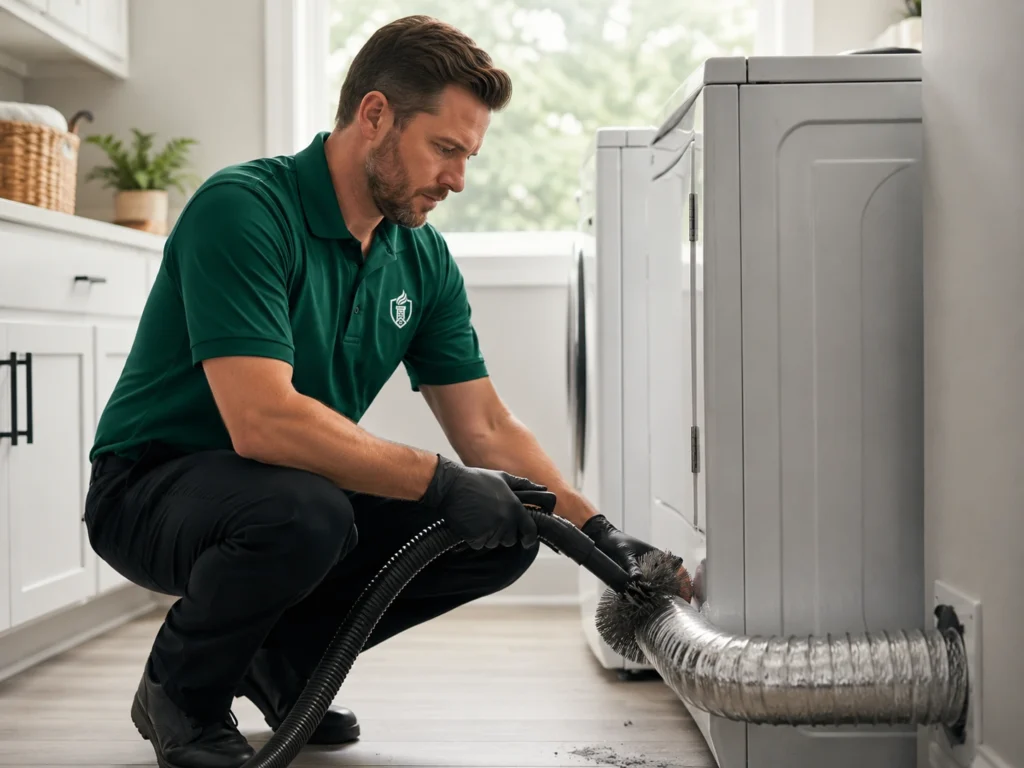
A blocked dryer vent is more than an inconvenience. The U.S. Fire Administration identifies failure to clean dryers as a leading factor in home dryer fires. If your dryer is also taking longer than it should, our guide on why a dryer takes so long to dry walks through the causes, and a professional dryer vent cleaning restores airflow.
1. Clothes take longer than one cycle to dry
This is the most common sign. When the vent is blocked, warm, damp air cannot escape, so loads come out still damp and need a second run. If your drying times have crept up, the vent is the first thing to check. A dryer vent cleaning restores the airflow the dryer depends on.
2. The dryer or your clothes feel very hot
A dryer that is hot to the touch, or laundry that comes out unusually hot, means heat is building up instead of venting outside. That extra heat stresses the appliance and raises the risk of a problem. It is a clear signal that the vent is not breathing.
3. A burning or musty smell during a cycle
A burning smell can mean lint is overheating near the dryer, which deserves immediate attention. A musty smell can mean trapped moisture in the vent, which our humid climate makes worse. Either odor is a reason to stop and have the vent checked.
4. Lint around the dryer or the outside vent
If you see lint collecting behind the dryer, around the duct connection, or near the exterior vent opening, lint is escaping where it should not. Buildup at the outside vent in particular means the duct is not clearing properly.
5. The outside vent flap does not move
Go outside while the dryer runs and watch the exterior vent. The flap should open with a steady flow of warm air. If it barely moves or stays shut, airflow is restricted somewhere in the run, which points to a clog.
6. It has been more than a year
If you cannot remember the last cleaning, or it has been more than a year, treat that as a sign in itself. Lint builds steadily with every load, and a long gap usually means a vent that is overdue, even without other symptoms.
Why these signs matter
Each sign points to restricted airflow, and restricted airflow is what makes a dryer vent dangerous and inefficient. Trapped lint is highly flammable, and the trapped heat that comes with a clog adds to the risk. Acting on these signs early helps reduce avoidable risk and keeps the dryer working the way it should.
Common in older and townhome layouts
Homes across Montgomery County, from Takoma Park and Silver Spring to Rockville and Germantown, often have laundry rooms set well inside the home, which means longer vent runs that clog more easily. Townhomes frequently route the duct through tight bends. If you notice any of these six signs, a professional cleaning clears the run and gets your dryer breathing again.
What to do when you spot the signs
If you notice one or two of these warnings, do not keep running the dryer through them. Start by cleaning the lint trap and checking the outside vent flap while the dryer runs. If the flap barely moves, or clothes still take too long after a clean trap, the vent run itself is likely blocked and needs professional attention. A burning smell deserves an immediate stop. Acting promptly turns a small clog into a quick fix rather than a hazard.
Why lint builds up so quickly
It is easy to underestimate how much lint a dryer produces. Every load sheds fibers, and while the trap catches much of it, a steady stream slips past into the vent. Longer runs, bends, and any sagging in the duct give that lint places to gather. Add the moisture that rides along with the warm air, common in our humid climate, and the lint packs together faster than many homeowners expect. That is why even a tidy laundry routine still needs the vent cleared on a schedule.
Prevention between cleanings
Between professional visits, a few habits help. Clean the lint screen before every load, avoid overloading, and glance at the exterior vent from time to time. Watch your drying times as the simplest early warning, since a creeping increase is usually the first sign of a developing clog. Homes from Silver Spring to Rockville with long interior vent runs benefit from a regular dryer vent cleaning to keep the path clear.
Safety first
These signs matter because they all point to restricted airflow, and restricted airflow is what makes a dryer vent both inefficient and unsafe. Trapped lint is highly flammable, and trapped heat adds to the risk. Treating the warning signs seriously helps reduce avoidable risk and keeps your laundry routine running smoothly.
Common questions about clogged vents
Homeowners often ask how serious a clog really is, and the answer is that it is both a safety and an efficiency issue, since trapped lint is flammable and a blocked vent makes the dryer work harder. Another common question is whether they can clear it themselves, and while cleaning the lint trap and checking the outside flap help, the full vent run usually needs professional brushes to clear properly. People also ask how to prevent clogs, and the simplest answer is regular cleaning paired with attention to drying times. Treating the warning signs early, rather than waiting, is what keeps a minor clog from becoming a real hazard.