Chimney Liner Cleaning

Chimney Liner Cleaning

The chimney liner is the protective inner surface of your flue, and keeping it clean is central to how safely your chimney vents. SafeFlow Chimney & Air provides chimney liner cleaning for Maryland homeowners, clearing creosote and soot from the liner so smoke and gases pass through safely.

The Protective Layer

What the Chimney Liner Does

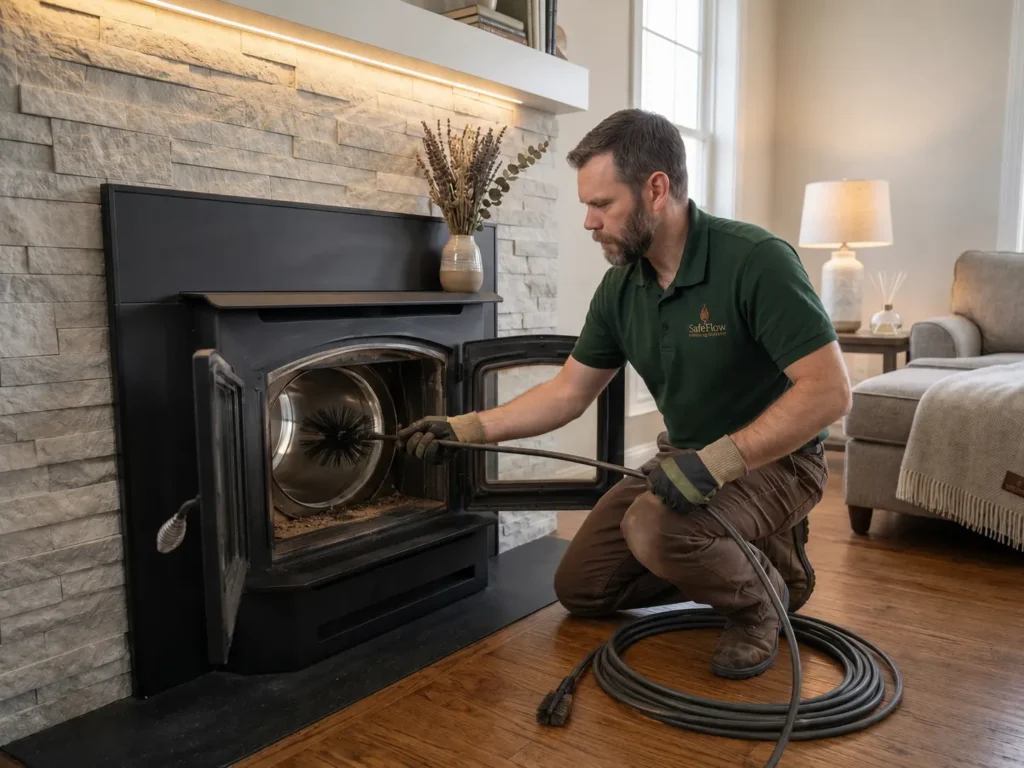
The chimney liner is the inner surface that runs the length of your flue, and it does important work. It gives smoke and gases a smooth path to travel, it protects the surrounding structure from the intense heat of the fire, and it helps the chimney vent efficiently. Over time, the liner collects the same creosote and soot as the rest of the flue, and because the liner is what smoke passes against directly, keeping it clean is central to safe venting. A clean liner lets your chimney do its job the way it was built to. Our liner cleaning clears the buildup that collects on this surface, and it is a core part of a complete chimney sweep.
Chimney liner cleaning service in Maryland by SafeFlow Chimney & Air

How We Work

How We Clean Your Chimney Liner

Cleaning the liner means working the full length of the flue surface. Here is our process.

DIAGNOSTIC AUDIT

We look at the liner to see how much buildup has collected and to understand its condition before we begin clearing it.

01

DEFINE THE METHOD

We protect the fireplace area and use a HEPA vacuum to keep soot and debris contained while we work the length of the liner.

02

EXECUTE THE SERVICE

Using brushes matched to your liner, we work the full length of the flue, clearing creosote and soot from the liner surface so the passage is clean and clear.

03

Verify & Document

We check that the liner is clear and the flue is open, then let you know the condition of the liner and when to schedule the next cleaning.

04

Our Projects

REAL WORK, CLEAR RESULTS

Explore real SafeFlow service examples from Maryland homes, including chimney, dryer vent, and air duct work completed with careful preparation, clear findings, and practical next steps for homeowners.

SafeFlow Chimney & Air - CHIMNEY CLEANING​​​​ SERVICE

Breathing New Life Into a Failing Chimney: A Completed Restoration in Upper Marlboro, MD

Upper Marlboro, MD

SafeFlow Chimney & Air - CHIMNEY CLEANING​​​​ SERVICE

Chimney Teardown and Reconstruction in Lanham, MD

Lanham, MD

SafeFlow Chimney & Air - CHIMNEY CLEANING​​​​ SERVICE

Expert Chimney Crown Rebuilding and Sealing in Rockville, MD

Rockville, MD

Why SafeFlow

Why a Clean Liner Matters for Safety

Because the liner is the surface that smoke and gases pass against directly, and the layer that protects the surrounding structure from heat, keeping it clean is one of the most important parts of chimney care. Creosote on the liner is flammable, so buildup here contributes directly to fire risk, and a coated liner also affects how efficiently your chimney vents. Regular cleaning keeps the liner clear and doing its job. For homes that use the fireplace regularly, cleaning the liner yearly as part of a sweep is the reliable approach. A chimney inspection can confirm the condition of the liner along with the rest of the system. SafeFlow serves Maryland homeowners, including Rockville and nearby areas.

System-Focused Specialists

Focused chimney, vent, and indoor air system care designed around real residential conditions, airflow concerns, buildup, and practical home safety.

Clean Controlled Service

Protective setup, careful work methods, and clean service habits help keep the home respected while the system is reviewed, cleaned, or serviced.

Clear Findings

We explain visible conditions, what was completed, and whether any next step may be recommended, without pressure, scare tactics, or vague claims.

Upfront Estimates

Clear service guidance before work begins, with straightforward recommendations based on the condition, access, and needs of the home.

MARYLAND CHIMNEY & AIR SYSTEM CARE

BRING SAFEFLOW INTO YOUR HOME WITH CONFIDENCE.

Whether you are dealing with chimney buildup, fireplace odor, dryer vent lint, dirty air ducts, or airflow concerns, SafeFlow Chimney & Air helps Maryland homeowners get clear answers, careful service, and practical next steps.
Chimney Technician -SAFEFLOW

Questions, answered

Helpful answers for Maryland homeowners considering chimney, dryer vent, or air duct service, with clear guidance on warning signs, service timing, process, and practical next steps.

The chimney liner is the inner surface that runs the length of your flue. It gives smoke a smooth path, protects the surrounding structure from heat, and helps the chimney vent efficiently. Keeping it clean is central to safe venting.
The liner collects creosote and soot just like the rest of the flue, and because smoke passes against it directly, buildup here is both a fire risk and a drag on venting. Regular cleaning keeps it clear.
At least once a year for regular fireplace users, as part of an annual sweep. Frequent wood burning leads to faster buildup and may call for more regular attention.
Yes. Clearing the liner is a core part of a complete chimney sweep, since the liner is the main surface where creosote and soot collect in the flue.
A chimney inspection is the best way to confirm the condition of your liner. We check it as part of cleaning and let you know what we find.
Most older Maryland homes have clay tile liners, while others use metal liners, especially with inserts and newer appliances. Each type collects creosote and residue that regular cleaning removes.
Yes. The liner is the surface creosote clings to most, and a heavy coating inside the liner is what fuels a flue fire. Keeping the liner clean is central to burning safely.
We use rotary brushing sized to the liner to loosen creosote and soot along its full length, then HEPA-filtered extraction to remove the debris. A camera check where useful confirms the liner is clear.
No. Cleaning uses brushes matched to the liner so it clears buildup without harming the surface. If we notice the liner is already cracked or deteriorated, we document it and recommend a qualified specialist.
A cracked liner is a safety concern because it lets heat and gases reach areas they should not. We do not repair liners, but we document the condition clearly and point you to a qualified professional for repair or relining. For broader home fire-safety guidance, see the U.S. Fire Administration.