
Chimney Sweep

Chimney Sweep

A chimney sweep is one of the most important things you can do to keep your fireplace safe and working well. SafeFlow Chimney & Air provides thorough chimney sweeping for homeowners across Maryland, clearing out the soot, creosote, and blockages that build up inside your flue over time. Whether you burn wood, use a gas fireplace, or heat with a pellet stove, our team leaves your chimney clean, clear, and ready for the season ahead.

Understanding The Service

What Does a Chimney Sweep Actually Do?

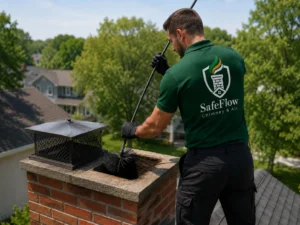
Many Maryland homeowners hear the term chimney sweep but are not quite sure what it involves. In simple terms, a chimney sweep is the process of removing the buildup that collects inside your chimney and flue after months of use. Every time you light a fire, tiny particles of soot and a tar-like substance called creosote cling to the inner walls of your chimney. Over time this layer thickens, narrows the passage that smoke travels through, and becomes a genuine fire risk. A proper sweep clears all of that away. Using specialized brushes, rods, and a HEPA vacuum system, our technicians work through the flue from the firebox to the flue cap, loosening and removing the buildup while keeping your home clean throughout. The goal is simple: a clear passage for smoke and gases to exit safely, and real peace of mind every time you light a fire. A thorough sweep also pairs naturally with a chimney inspection, which checks the flue and structure for any issues before the heating season begins.
SafeFlow-Chimney-Air-CHIMNEY-SWEEP SERVICE

How We Work

What to Expect During Your Chimney Sweep Visit

We keep the process simple, tidy, and easy to understand. Here is what a typical chimney sweep appointment looks like from start to finish.

DIAGNOSTIC AUDIT

Our technician arrives on time and protects the area around your fireplace with drop cloths and covers. We take care to keep your floors, furniture, and home clean from the first minute to the last.

01

DEFINE THE METHOD

Before sweeping, we take a look inside the chimney to understand how much buildup is present and whether anything is blocking the passage, such as a bird nest or debris. This tells us exactly what the flue needs.

02

EXECUTE THE SERVICE

Using brushes sized to your flue and a HEPA vacuum to contain dust, we work through the chimney and clear away soot and creosote. You will not be left with a mess. The vacuum keeps the air clean while we work.

03

Verify & Document

Once the flue is clear, we do a last look to confirm everything is clean and open, then walk you through what we found and when your next sweep should be scheduled.

04

Our Projects

REAL WORK, CLEAR RESULTS

Explore real SafeFlow service examples from Maryland homes, including chimney, dryer vent, and air duct work completed with careful preparation, clear findings, and practical next steps for homeowners.

SafeFlow Chimney & Air - CHIMNEY CLEANING​​​​ SERVICE

Breathing New Life Into a Failing Chimney: A Completed Restoration in Upper Marlboro, MD

Upper Marlboro, MD

SafeFlow Chimney & Air - CHIMNEY CLEANING​​​​ SERVICE

Chimney Teardown and Reconstruction in Lanham, MD

Lanham, MD

SafeFlow Chimney & Air - CHIMNEY CLEANING​​​​ SERVICE

Expert Chimney Crown Rebuilding and Sealing in Rockville, MD

Rockville, MD

Why SafeFlow

How Often Should You Have Your Chimney Swept?

A common question we hear is how often a chimney really needs to be swept. The general guidance followed across the industry is at least once a year, but the right frequency depends on how you use your fireplace and what you burn. Homeowners who burn wood regularly through the colder months often need a sweep every year, because wood produces the most creosote. Gas fireplaces burn cleaner and may need attention less often, though they still benefit from a yearly check for blockages and buildup. Pellet stoves fall somewhere in between and depend heavily on how much you run them. The safest approach is a yearly sweep before the heating season begins, so your chimney is clear and ready when you need it most. Many homeowners include it as part of a regular chimney maintenance routine. If you notice smoke backing up into the room, a strong odor from the fireplace, or slow-starting fires, those are signs your chimney may need attention sooner. SafeFlow serves homeowners throughout Maryland, including Silver Spring, Germantown, Rockville, and surrounding communities.

System-Focused Specialists

Focused chimney, vent, and indoor air system care designed around real residential conditions, airflow concerns, buildup, and practical home safety.

Clean Controlled Service

Protective setup, careful work methods, and clean service habits help keep the home respected while the system is reviewed, cleaned, or serviced.

Clear Findings

We explain visible conditions, what was completed, and whether any next step may be recommended, without pressure, scare tactics, or vague claims.

Upfront Estimates

Clear service guidance before work begins, with straightforward recommendations based on the condition, access, and needs of the home.

MARYLAND CHIMNEY & AIR SYSTEM CARE

BRING SAFEFLOW INTO YOUR HOME WITH CONFIDENCE.

Whether you are dealing with chimney buildup, fireplace odor, dryer vent lint, dirty air ducts, or airflow concerns, SafeFlow Chimney & Air helps Maryland homeowners get clear answers, careful service, and practical next steps.

Chimney Technician -SAFEFLOW

Questions, answered

Helpful answers for Maryland homeowners considering chimney, dryer vent, or air duct service, with clear guidance on warning signs, service timing, process, and practical next steps.

The terms are often used together, and there is overlap. A sweep focuses on clearing soot and creosote from the flue so smoke can pass safely. A full cleaning goes further and addresses the firebox, smoke chamber, and other parts of the system. For a complete check of the system, a chimney inspection is a good companion service.
Most standard chimney sweeps take about 45 minutes to an hour, depending on the size of your chimney and how much buildup has collected. If it has been several years since your last sweep, it may take a little longer.
No. We use drop cloths to protect your space and a HEPA vacuum to contain soot and dust while we work. Keeping your home clean is part of the job, and we leave the area as tidy as we found it.
Late summer and early fall are ideal, before you start using your fireplace for the season. Scheduling ahead of the colder months means your chimney is clear and ready, and you avoid the busy winter rush.
Common signs include smoke entering the room instead of rising up the flue, a strong or smoky odor from the fireplace, fires that are slow to start, or a dark buildup visible inside the chimney. If it has been more than a year since your last sweep, it is worth booking one.
For homes that burn wood, plan a cleaning whenever creosote has built up, with a chimney inspection at least once a year as the National Fire Protection Association recommends. Homes that burn often, or burn unseasoned wood, may need cleaning more than once a season. A yearly check before winter is the safe habit.
Creosote is the dark, flammable residue that wood smoke leaves inside a chimney. As it builds up it narrows the flue and becomes fuel for a chimney fire. Removing it during a cleaning is the single most important step for burning safely, which is why regular sweeping matters.
Yes. Older flues with heavy or hardened creosote take more time and effort, and a camera check helps confirm the flue is clear afterward. If the buildup has reached a glazed stage, we will explain what we find and the safest way to proceed.
Yes. Gas appliances still vent through a flue that collects debris and can develop blockages or moisture issues. We clean and check the accessible venting; any repair need is referred to a qualified specialist.
You can brush light soot from an accessible flue, but reaching the full length safely, removing hardened creosote, and checking the liner are hard to do well without professional tools. A professional cleaning uses rotary brushing and HEPA extraction and inspects the flue at the same time, which is both safer and more thorough.

Professional Equipment We Use

Chimney cleaning is only as good as the tools behind it. Our crew brings professional-grade equipment to every visit so buildup leaves your home instead of settling in it.

What Is Included

  • Cleaning of the accessible flue and firebox surfaces
  • Rotary brushing to loosen creosote and soot
  • HEPA extraction of loosened debris
  • A visual check that the flue is clear after cleaning
  • Protection of the work area and cleanup before we leave
  • A plain-language summary of what we found

What Is Not Included

  • Masonry, crown, or liner repair
  • Chimney cap or liner installation or replacement
  • Structural rebuilding of the chimney
  • Repair of damage found during cleaning

If we find damage such as a cracked liner or deteriorated masonry, we document it clearly and recommend a qualified repair specialist. SafeFlow focuses on cleaning and inspection.

Pricing Guidance

Chimney cleaning is priced by the condition and height of the flue and how much creosote has built up, not by a flat rate that would misrepresent your home. A single open fireplace that is swept yearly costs less than an older flue with heavy, hardened buildup. Homes with more than one flue, or with difficult roof access, take longer. We confirm the price with you before any work begins, so there are no surprises.

Seasonal Timing in Maryland

In Maryland the safe time to clean a chimney is late summer through fall, before the heating season begins. The humid Mid-Atlantic climate works moisture into masonry over the summer, and a full winter of wood fires is what drives creosote buildup. Cleaning before you light the first fire means you head into the cold months with a clear, safe flue instead of discovering a problem in January.