Fireplace Insert Cleaning

Fireplace Insert Cleaning

A fireplace insert turns an open fireplace into an efficient heating source, but that efficiency comes with specific cleaning needs. SafeFlow Chimney & Air provides fireplace insert cleaning for Maryland homeowners, clearing the insert and its connected liner so it keeps burning cleanly and efficiently.

Efficiency Needs Upkeep

What a Fireplace Insert Is and Why It Needs Cleaning

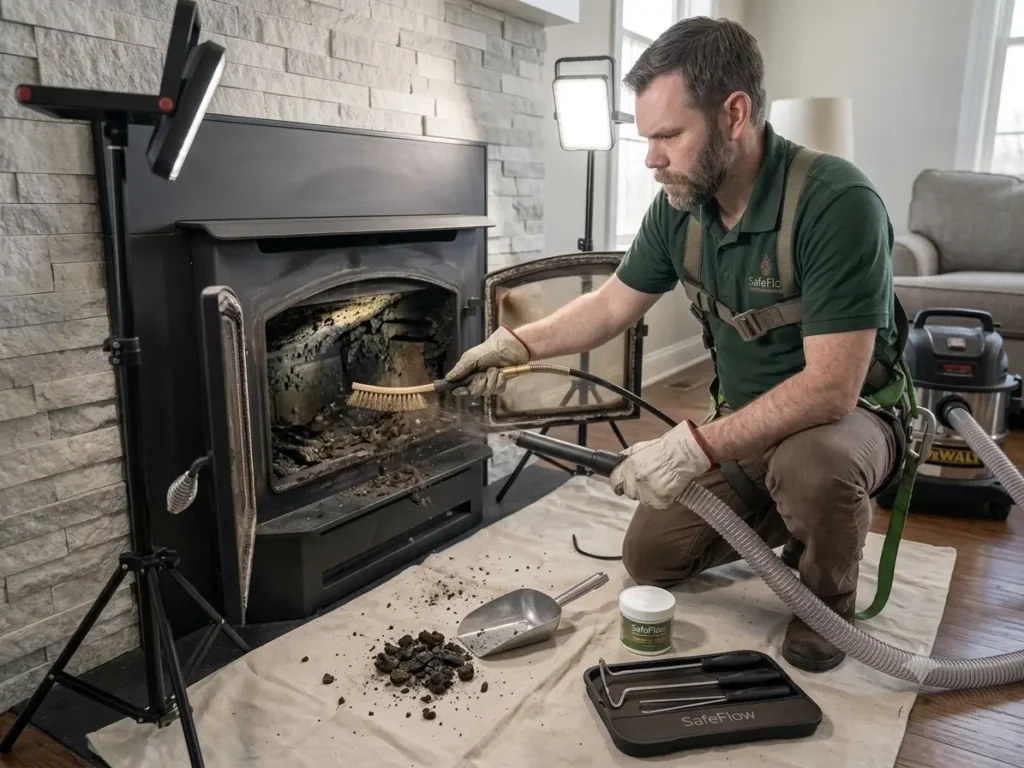
A fireplace insert is a closed unit that fits into an existing open fireplace, turning it into a much more efficient heater. Because it is a sealed, efficient burning unit, it is often run for longer, slower burns, and like a wood stove, that can produce more creosote. An insert is connected to your chimney by a liner, and both the insert and that liner collect buildup over time. The glass front also develops a film, and ash collects inside the unit. Because the insert sits snugly inside the fireplace, cleaning it properly means addressing the unit and its connected liner together. Our insert cleaning covers both, and works alongside our chimney sweep service for the full chimney.
Fireplace insert cleaning service in Maryland by SafeFlow Chimney & Air

How We Work

How We Clean Your Fireplace Insert

Insert cleaning addresses the unit, the glass, and the connected liner. Here is our process.

DIAGNOSTIC AUDIT

We make sure the insert is completely cool, then protect the area in front of the fireplace before we begin.

01

DEFINE THE METHOD

We remove ash and creosote from inside the insert, including the corners and baffle area where buildup collects, using a HEPA vacuum to contain the dust.

02

EXECUTE THE SERVICE

We clear the film from the glass front so it is transparent again, and clean the connected liner that carries smoke from the insert up the chimney.

03

Verify & Document

We put everything back in place, confirm the insert and liner are clear and drawing properly, and let you know the condition we found.

04

Our Projects

REAL WORK, CLEAR RESULTS

Explore real SafeFlow service examples from Maryland homes, including chimney, dryer vent, and air duct work completed with careful preparation, clear findings, and practical next steps for homeowners.

SafeFlow Chimney & Air - CHIMNEY CLEANING​​​​ SERVICE

Breathing New Life Into a Failing Chimney: A Completed Restoration in Upper Marlboro, MD

Upper Marlboro, MD

SafeFlow Chimney & Air - CHIMNEY CLEANING​​​​ SERVICE

Chimney Teardown and Reconstruction in Lanham, MD

Lanham, MD

SafeFlow Chimney & Air - CHIMNEY CLEANING​​​​ SERVICE

Expert Chimney Crown Rebuilding and Sealing in Rockville, MD

Rockville, MD

Why SafeFlow

How Often Should a Fireplace Insert Be Cleaned?

A fireplace insert should be cleaned at least once a year, and heavy users who run long, slow burns may benefit from more frequent attention. Because inserts are efficient, sealed units often run for extended burns, they can produce creosote faster than an open fireplace used occasionally. Both the insert and its connected liner collect this buildup, so cleaning them together matters. A yearly cleaning before the heating season keeps the insert burning efficiently and safely. Pairing it with a chimney inspection confirms the condition of the liner. SafeFlow serves Maryland homeowners, including Silver Spring, Rockville, and nearby areas.

System-Focused Specialists

Focused chimney, vent, and indoor air system care designed around real residential conditions, airflow concerns, buildup, and practical home safety.

Clean Controlled Service

Protective setup, careful work methods, and clean service habits help keep the home respected while the system is reviewed, cleaned, or serviced.

Clear Findings

We explain visible conditions, what was completed, and whether any next step may be recommended, without pressure, scare tactics, or vague claims.

Upfront Estimates

Clear service guidance before work begins, with straightforward recommendations based on the condition, access, and needs of the home.

MARYLAND CHIMNEY & AIR SYSTEM CARE

BRING SAFEFLOW INTO YOUR HOME WITH CONFIDENCE.

Whether you are dealing with chimney buildup, fireplace odor, dryer vent lint, dirty air ducts, or airflow concerns, SafeFlow Chimney & Air helps Maryland homeowners get clear answers, careful service, and practical next steps.

Chimney Technician -SAFEFLOW

Questions, answered

Helpful answers for Maryland homeowners considering chimney, dryer vent, or air duct service, with clear guidance on warning signs, service timing, process, and practical next steps.

A fireplace insert is a closed, efficient heating unit that fits into an existing open fireplace. It is connected to the chimney by a liner and burns more efficiently than an open fire, which also means it needs regular cleaning.
At least once a year, and more often for heavy users who run long, slow burns. Because inserts often run extended burns, they can build up creosote faster than an occasionally used open fireplace.
Yes. The liner that connects your insert to the chimney collects creosote just like the flue does, and cleaning it together with the insert is important for a complete result.
Inserts are sealed, efficient units often run on long, slow burns to hold heat, and slow burning produces more creosote. Burning dry, seasoned wood helps reduce buildup.
Yes. Clearing the film that builds up on the glass front is part of our insert cleaning, so the glass is transparent again and the flame is easy to see.
We clean the accessible surfaces of the insert and its liner, clear creosote and soot, clean the glass, and confirm the venting is clear. Inserts burn tightly and build residue, so a thorough cleaning matters.
Yes. Buildup inside an insert and its liner restricts airflow and venting, which can make the unit burn less efficiently and heat less effectively. A clean insert draws and heats the way it was designed to.
Yes. An insert vents through a dedicated liner that runs up the chimney, so cleaning focuses on that liner and the insert itself rather than an open masonry flue. Inserts also tend to build creosote faster.
Most insert cleanings take about an hour, though heavier buildup or a long liner run takes longer. We keep the work contained and confirm the liner and venting are clear before we finish.
Before the heating season, in late summer or fall, is the safe time so the insert is clean and ready for winter. Inserts used heavily through the cold Mid-Atlantic months benefit from a yearly cleaning. For broader home fire-safety guidance, see the U.S. Fire Administration.