Not every chimney inspection is the same. The National Fire Protection Association defines three levels, each for a different situation. Knowing the difference helps you ask for the right service and understand what a technician will and will not do.
Why chimney inspections have levels
The three levels come from NFPA 211, the standard that guides chimney care. The idea is simple: a routine yearly check does not need to be as invasive as an inspection after a chimney fire or a home sale. Matching the level to the situation keeps the inspection thorough without being unnecessarily disruptive.
Level 1 inspection
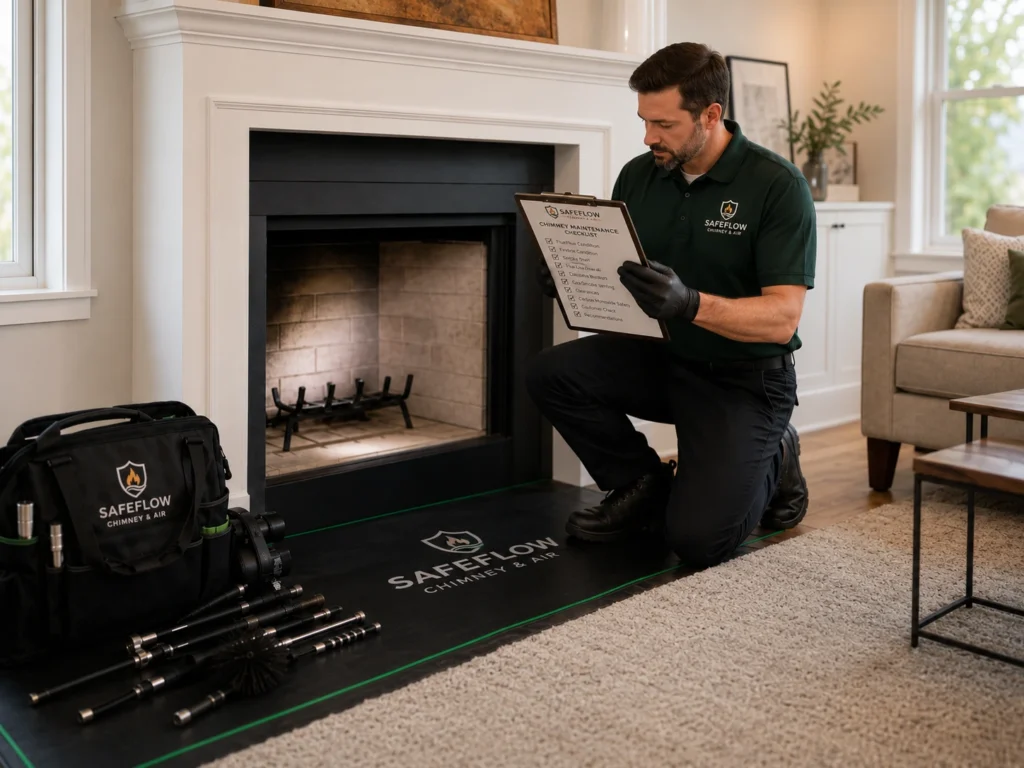
A Level 1 chimney inspection is the routine, baseline check for a chimney in continued service under normal conditions. The technician reviews the readily accessible parts of the chimney and venting, confirms the flue is clear of obstruction and buildup, and looks for basic signs of soundness. This is the right level for most homeowners who use their fireplace year after year without any change.
Level 2 inspection
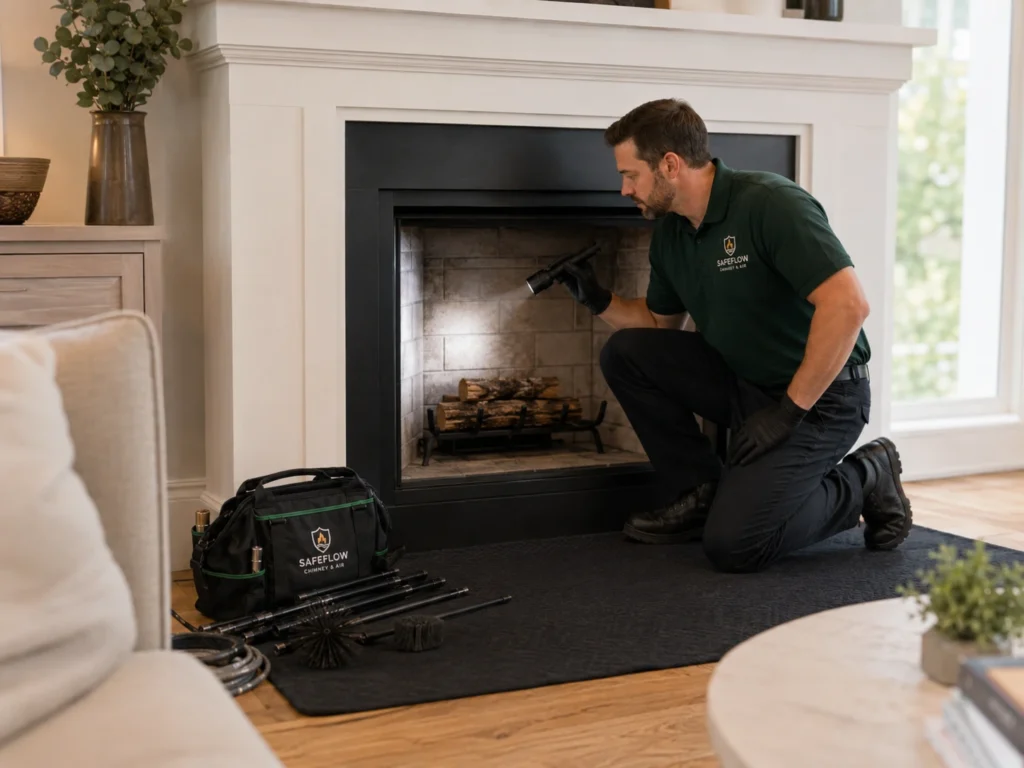
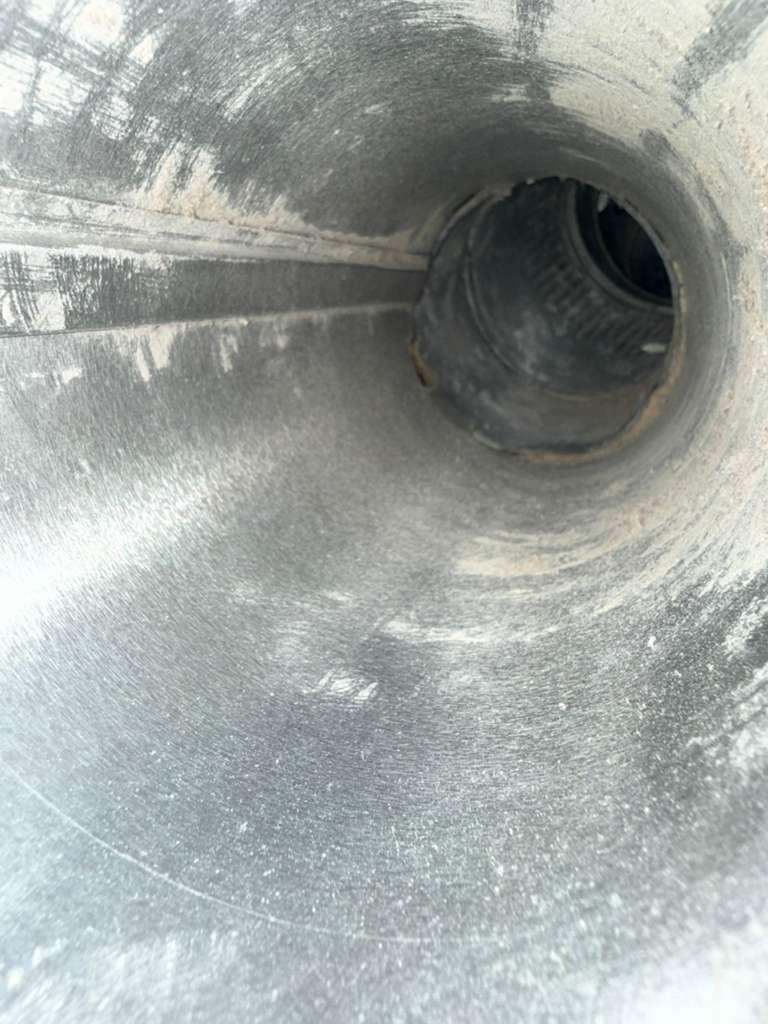
A Level 2 chimney inspection goes further and includes camera assisted review of the flue interior. It is recommended when something has changed or when more detail is needed, such as:
- Buying or selling a home.
- After a chimney fire, weather event, or suspected damage.
- When you change the fuel, add an appliance, or replace a liner.
It still covers accessible areas but adds the detail a camera provides, without opening up the structure. After a chimney fire in particular, a Level 2 review is important because a fire can damage a flue in ways that are not visible from the firebox. The U.S. Fire Administration treats heating equipment as a significant home fire cause, and a camera assisted look confirms whether the flue came through a fire event intact.
Level 3 inspection
A Level 3 chimney inspection is the most detailed and is used only when a Level 1 or Level 2 review points to a serious hidden concern. It may require reaching concealed areas to confirm a hazard such as a damaged liner or structural crack. Because it is reserved for genuine, evidence based concerns, most homes never need one.
Why a real estate sale often triggers a Level 2
Home sales are one of the most common reasons a Level 2 inspection is requested. When a property changes hands, the fireplace and chimney are changing from one owner and one pattern of use to another, which counts as a change to the system. A camera assisted review gives the buyer a clear, documented picture of the flue condition before closing, and it protects the seller by putting the chimney’s real state on record rather than leaving it to guesswork.
How to know which level you need
As a rule of thumb: routine yearly care is Level 1; a home sale, a chimney fire, or a system change calls for Level 2; and a confirmed, serious hidden concern is what leads to Level 3. If you are not sure, a Level 1 visit is the starting point, and the technician will tell you if more is warranted. You are never obligated to jump straight to the most detailed level, and a good company will not push you toward one without a clear, evidence based reason.
What an inspection includes and what it does not
An inspection identifies buildup, obstruction, and visible damage, and it pairs naturally with a chimney cleaning when creosote is present. It does not include masonry, liner, or fireplace repair. If a concern is found, a good technician documents it clearly and recommends a qualified repair specialist, so you have an honest record and a sensible next step.
How a sweep and an inspection work together
Many homeowners combine the two in one visit: the inspection confirms the flue condition, and the cleaning clears any buildup. If you are unsure how they differ, our guide on chimney sweep vs inspection breaks it down.
How often to schedule
The National Fire Protection Association recommends a chimney inspection at least once a year for homes in regular use. For older homes across Montgomery and Prince George’s County, including Rockville and Bowie, a yearly Level 1 check before the heating season is the dependable habit, with a higher level only when a specific reason calls for it.