
Duct cleaning is a service where the honest answer is often “it depends.” Post-renovation is one of the situations where it does not. A remodel generates fine particulate on a scale ordinary living does not, and if the HVAC system ran at any point during the work, a good deal of that material is now inside the ductwork.
What a renovation puts into the air
Drywall sanding produces an extremely fine dust that stays airborne for a long time. Add sawdust, insulation fibers, joint compound, plaster, tile cutting, and whatever came loose during demolition, and the particle load in the house during a remodel is nothing like normal conditions.
Why it ends up in the ducts
The return side of an HVAC system is continuously pulling room air in. If the system runs during construction, it is actively drawing that dust into the ductwork and distributing it around the house. Even with the system off, open registers collect settling debris that gets pushed through the moment the system starts again.
Why it keeps showing up after the work is done
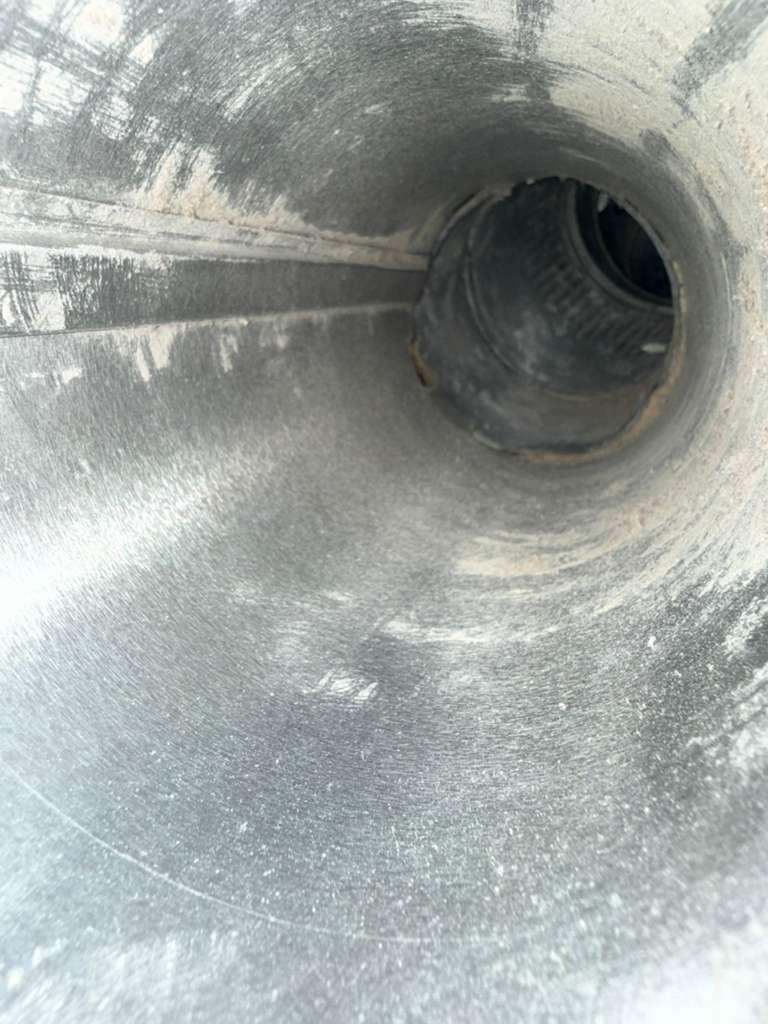
This is the part homeowners find frustrating. The house is cleaned, the contractors leave, and a fine film keeps returning to surfaces for weeks. That is the ductwork releasing what it collected, a little at a time, every time the system cycles. Cleaning the rooms repeatedly does not solve it because the reservoir is inside the ducts.
Where this fits with EPA guidance
The EPA guidance on air duct cleaning is deliberately measured about routine cleaning, and we think that caution is right. It does identify situations where cleaning is warranted, including ducts clogged enough to release debris into the living space. Post-construction contamination is one of the clearest real-world versions of that condition, which is why we treat it differently from routine maintenance. We make the same argument in our piece on whether air duct cleaning is worth it.
When to schedule it
After the dusty work is finished and before you settle back into normal use of the space. Cleaning ducts while sanding is still happening means doing it twice. If the project runs in phases, wait until the last of the demolition, drywall, and cutting is complete.
What the cleaning should cover
- Supply runs, which distribute the dust into the rooms.
- Return runs, which is where the heaviest accumulation usually sits.
- The blower compartment and the area around the coil.
- Registers and grilles themselves.
- A filter change afterward, since the existing one has been loaded.
Our walkthrough of what happens during an air duct cleaning covers the process in more detail.
Protecting the system next time
If another phase of work is coming, a few habits limit the problem: cover returns and registers in the work area, keep the system off during heavy dust generation where practical, isolate the work zone, and change the filter when the phase ends. None of it is perfect, but it substantially reduces what gets into the ducts.
New construction has the same issue
Homeowners moving into a newly built house often assume the system is clean because everything is new. Ductwork is installed early and sits open through months of framing, drywall, and finishing work. New does not mean clean, and it is worth checking rather than assuming.
The dryer line is worth checking too
If laundry connections were moved or the dryer was disconnected and reinstalled during the project, the vent line deserves a look. Construction debris in a dryer vent is a fire consideration, not just an air quality one, which we explain in how dryer vent cleaning reduces fire risk. Our dryer vent cleaning service covers the full run.
The wider air quality picture
Ducts are one input among several. The EPA guidance on improving indoor air quality covers source control, ventilation, and filtration together, and our indoor air quality page takes the same approach. If dust sensitivity or allergies were part of why you noticed the problem, whether duct cleaning helps with allergies and dust addresses that specifically.
Booking after your project
Tell us roughly what the work involved and when it finished, along with your vent count and number of systems. See our air duct cleaning page for what is included, or contact us to schedule once the dust has stopped.