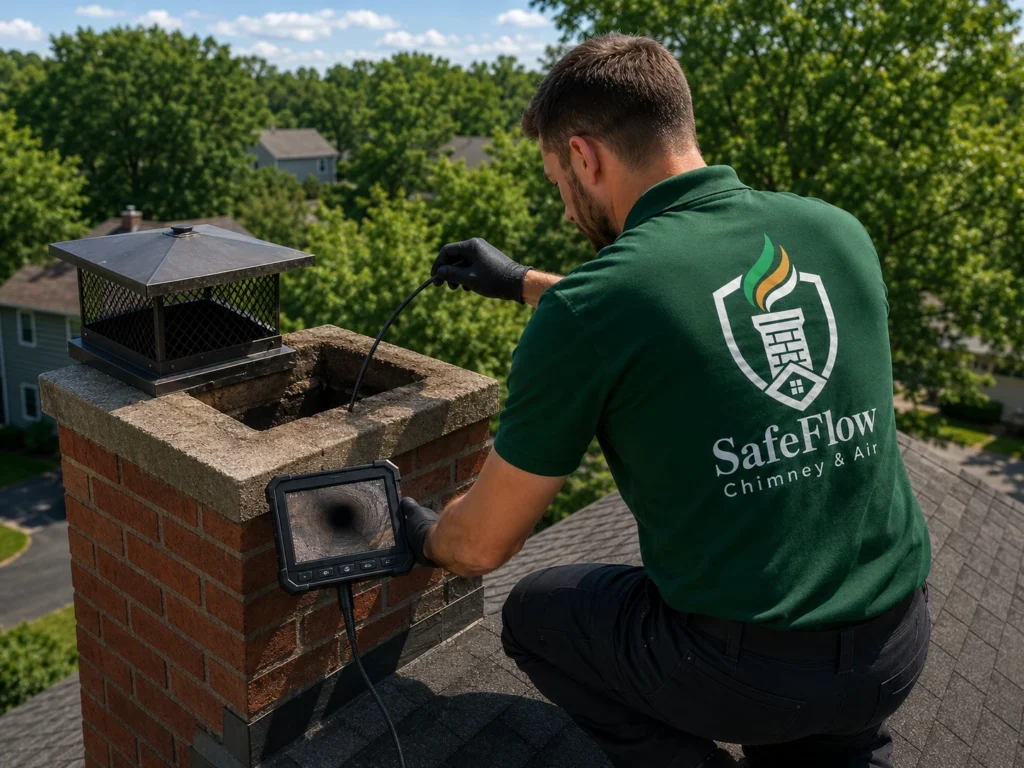
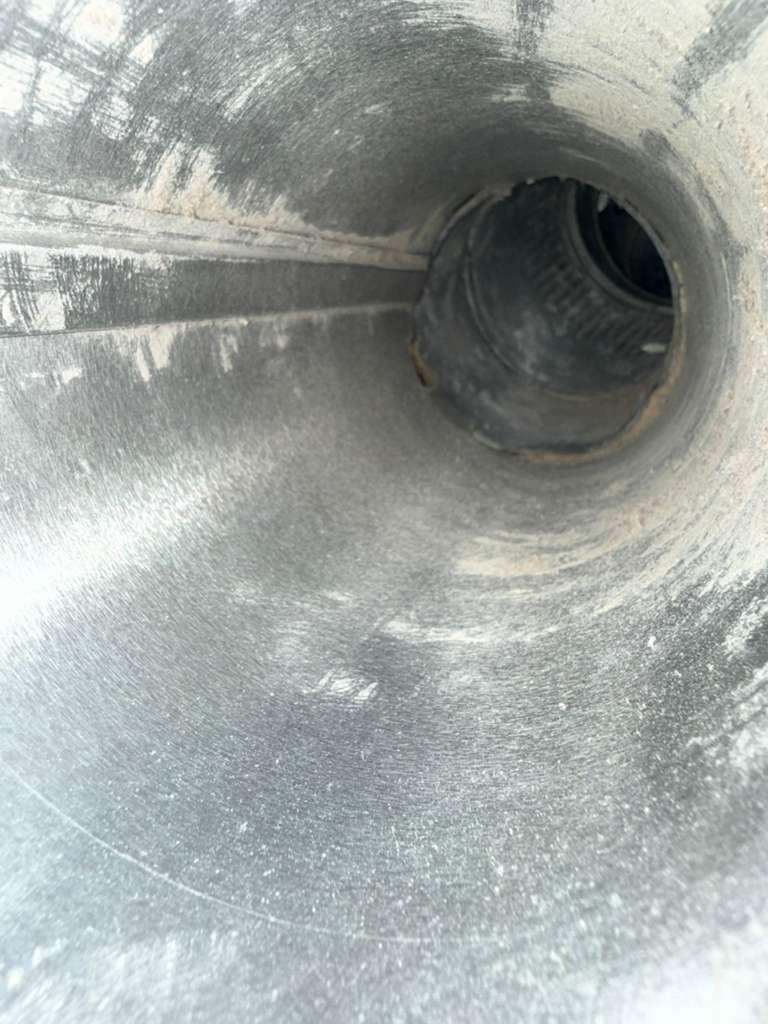

A home inspection covers a great deal of ground, which is exactly why the chimney tends to get a short paragraph. Most general inspectors look at the exterior stack and the firebox and note what is visible. Very few put a camera up the flue. For a buyer, that gap sits over one of the more consequential systems in the house.
What a general home inspection usually covers
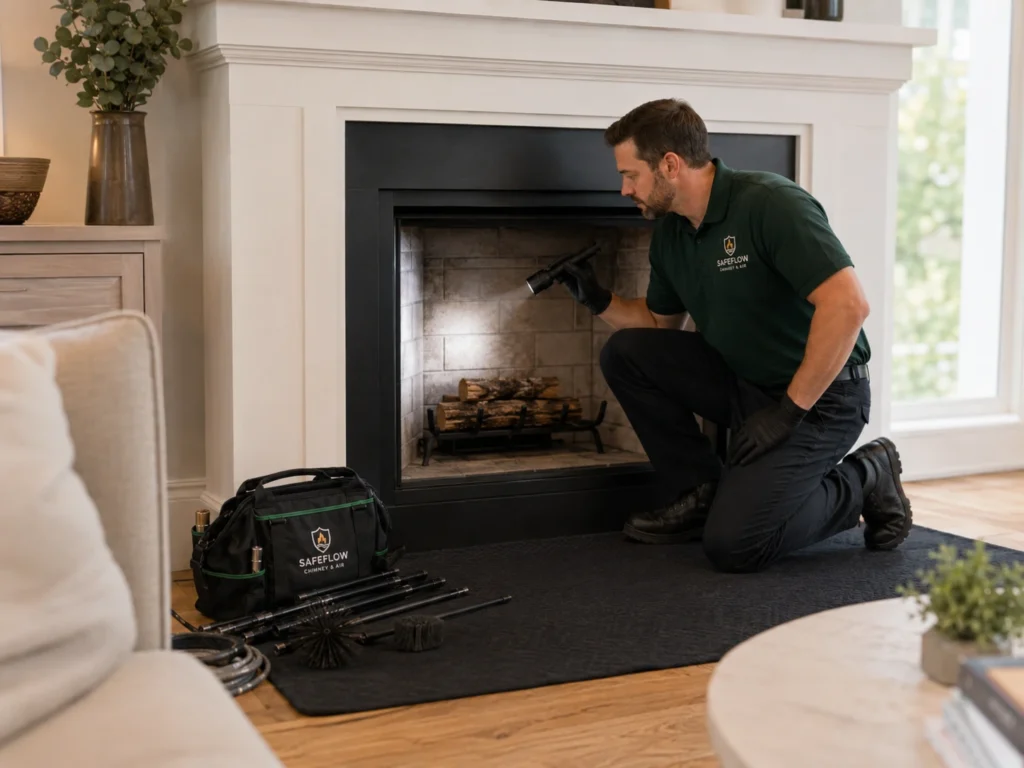
A standard inspection typically notes the visible condition of the chimney exterior, whether there is a cap, and the obvious state of the firebox and damper. That is a reasonable surface check. What it does not usually include is the interior condition of the flue along its full length, which is where the conditions that matter most tend to live.
Why the flue interior matters to a buyer
The inside of the flue is where creosote accumulates, where liner joints can open up, and where blockages form. None of that is visible from the ground or from the hearth. A buyer who does not look inside is accepting an unknown on a system that carries combustion byproducts out of the house.
Which inspection level applies to a sale
Chimney inspections are described in three levels, and the distinction is practical rather than bureaucratic. A Level 1 chimney inspection is the basic visual check appropriate when a system is in continued service under the same conditions. A Level 2 chimney inspection adds video scanning of the flue interior and accessible areas, and it is the level associated with a property transfer or a change in how the appliance is used. A Level 3 chimney inspection involves opening up concealed areas and is reserved for cases where a serious hazard is suspected. We break all three down in the three chimney inspection levels explained.
The short version for buyers
A property sale is the textbook trigger for a Level 2. The system is changing hands, nobody can vouch for its recent history, and video documentation of the flue interior is exactly what a buyer needs.
What an inspection can reveal
- Heavy creosote accumulation left by the previous owner.
- Cracked or displaced flue tiles visible on camera.
- Blockages from nesting material or fallen debris.
- A missing or damaged cap allowing water and animals in.
- Evidence the fireplace has not been used or serviced in years.
- An appliance connected in a way that does not match the flue.
Why it is worth doing before closing
Once you own the house, everything found becomes your project. Before closing, a documented report is information you can act on while there is still a negotiation happening. That is the entire practical argument, and it applies whether or not you plan to use the fireplace immediately.
What if the seller says it was recently swept?
That is useful and worth asking about, but a sweep and an inspection answer different questions. A sweep removes buildup. An inspection documents condition. A recently cleaned flue can still have a cracked tile or a poor termination. We explain the distinction in the difference between a sweep and an inspection.
Older Maryland housing stock
Much of the housing around Silver Spring, Hyattsville and College Park dates from decades when masonry flues with clay tile liners were standard. Those systems age in predictable ways, and their condition varies enormously depending on whether previous owners maintained them. We wrote about this pattern in chimney and vent care in older Maryland homes. For a buyer, that variability is the reason to look rather than assume.
What about a home with a gas fireplace
Gas appliances produce far less visible residue, which leads many buyers to skip the check entirely. The venting still matters, and blockages and deterioration still occur. A gas fireplace cleaning service and an inspection of the venting are both reasonable before taking on an unfamiliar system.
Fire safety context
The U.S. Fire Administration heating safety guidance treats heating equipment as a significant contributor to home fires, and keeping venting clean and sound is a core part of that guidance. For a buyer, this is the least expensive point in the entire ownership cycle at which to establish the condition of the system.
Booking one during a transaction
Timing is usually tight during an inspection period, so it helps to arrange the chimney visit alongside the general inspection rather than after it. If you are under contract on a home with a fireplace, contact us with the address and the closing timeline, and see our chimney inspection page for what the visit includes.