It is a fair question to ask before booking, because it determines what kind of morning you are planning. The honest answer is that a routine cleaning on a well-maintained single flue is usually about an hour, and that several ordinary circumstances push it well past that. Here is what the visit actually involves and what stretches it.
The short answer
For a single flue in reasonable condition, cleaned on a regular schedule, plan on roughly an hour from setup to cleanup. Add an inspection and you are closer to ninety minutes. Neglected systems, multiple flues, or difficult access can take considerably longer.
What happens first: setup and protection
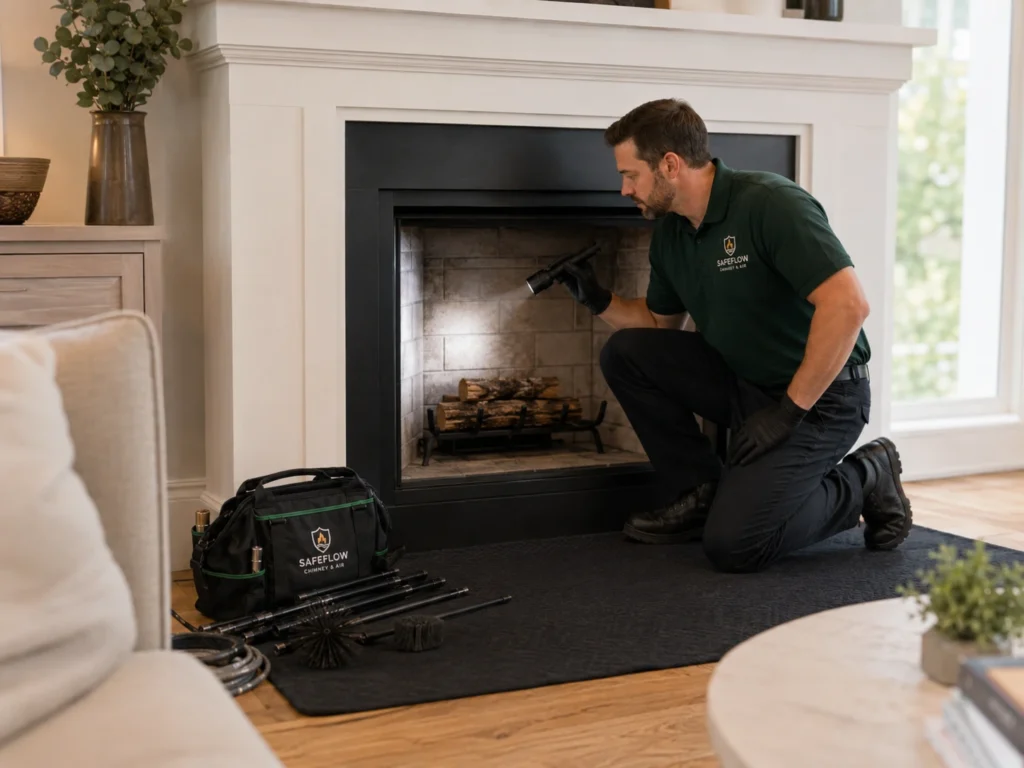
Before anything is cleaned, the work area is protected. Drop cloths go down, the hearth and the surrounding floor are covered, and a vacuum with appropriate filtration is set at the fireplace opening to capture airborne soot. This part takes longer than people expect, and skipping it is the reason some homeowners have bad memories of a previous sweep.
The cleaning itself
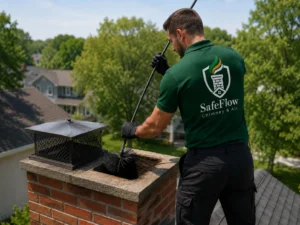
Brushes sized to the flue are run the length of the chimney to break loose creosote and soot from the walls. Depending on the system and the access, this is done from the top down, from the fireplace up, or both. The smoke chamber and smoke shelf are addressed as well, since that is where a surprising amount of debris settles. Our smoke chamber cleaning page covers that area specifically.
Removing what came down
Everything loosened has to be collected out of the firebox rather than left to be tracked through the house. That is the stage covered by soot and ash removal, and it is a meaningful share of the total time on a heavily built-up system.
What makes a visit take longer
- Years since the last cleaning. Hardened, glazed creosote takes far more effort than light flaky soot. Our guide to what creosote is and how to prevent it explains why the stages differ so much.
- Multiple flues. A fireplace plus a furnace flue in the same stack is two jobs in one visit.
- Roof access. Steep pitch, height, or weather conditions all add time.
- Blockages. Nesting material or fallen debris has to be cleared before normal cleaning can proceed. That is covered by animal nest and debris removal.
- Adding an inspection. Camera work along the flue is time well spent but it is additional time.
- Inserts and appliances. A fireplace insert may need to be pulled or partially disassembled for proper access, which is why gas fireplace cleaning and insert work are scheduled with more room.
How to make it faster
- Do not burn a fire for at least twenty four hours before the visit.
- Clear a working path to the fireplace and move fragile items off the mantel.
- Remove logs, grates, and ash containers from the firebox if you can.
- Keep pets in another room, since doors will be opening.
- Have the technician told in advance if there is more than one flue.
How messy is it?
Done correctly, a cleaning should not leave visible soot in the room. Containment and vacuum filtration are what make that true, and they are also what separates a professional visit from a shortcut. If the work area was properly protected at the start, the end of the visit should look like nothing happened.
What you should get at the end
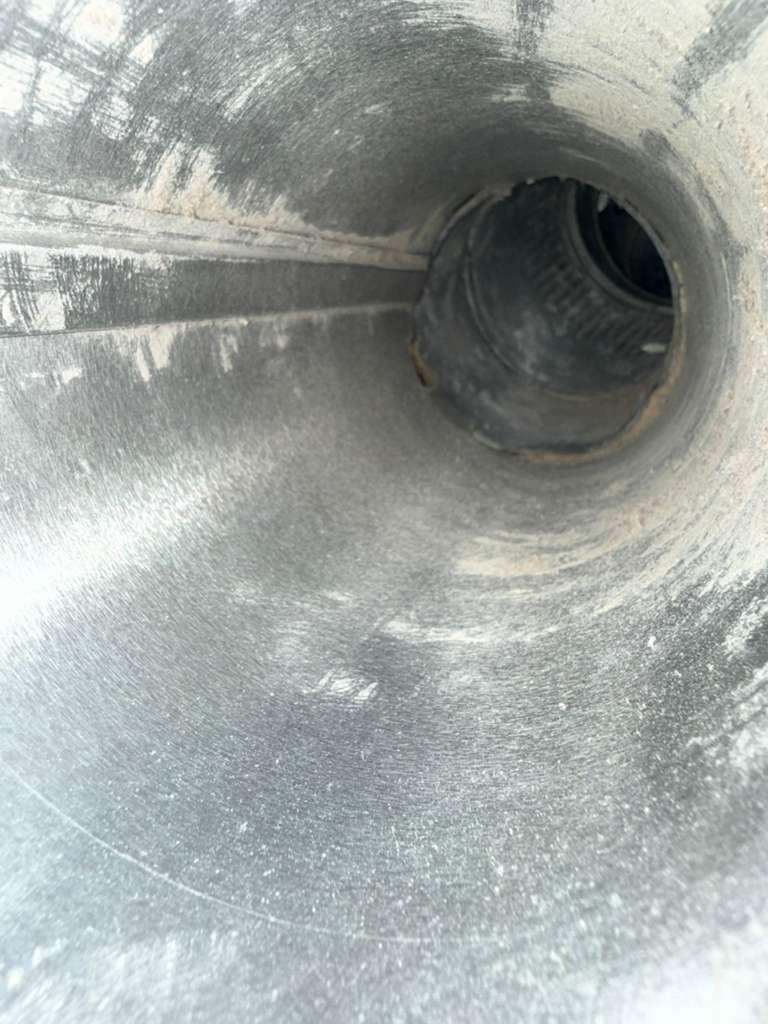
A clear account of what was found, not just confirmation the job is done. That includes how much buildup there was, anything noticed about the liner, cap, or termination, and a sensible recommendation for when to return. If an inspection was included, images from the flue interior are part of that record.
How often to book it
Annual service before the heating season is the standard rhythm for households that burn wood. Frequency really depends on how much you burn and what you burn, which we work through in how often a chimney should be swept. The U.S. Fire Administration heating safety guidance makes the same basic point: heating equipment and its venting need to be kept clean and clear, and an annual visit is the simplest way to make that happen on schedule rather than by memory.
Booking a visit
Late summer and early autumn are the calmest time to schedule, before the first cold week fills everyone calendar. See our chimney cleaning page for what is included, or contact us with the number of flues and roughly when the system was last serviced, and we will tell you what to plan for.