

A chimney works by moving air, and anything narrowing that path changes how the whole system behaves. Blockages rarely announce themselves. They show up as a fire that will not draw properly, a smell that was not there last year, or a room that fills with smoke on a cold morning. Here is how to recognise one and what usually causes it.
Smoke coming back into the room
This is the clearest signal. If smoke spills into the room instead of rising, the flue is not moving air the way it should. There are other explanations, including a closed damper or a cold flue that has not been warmed, but a restriction is high on the list and it deserves to be ruled out before the next fire.
A fire that will not get going
A fire that keeps dying back or never establishes a strong draw is often working against a restricted flue. Wet wood produces the same symptom, so the useful test is whether the behaviour changed. A system that drew well last winter and struggles this one has developed something.
Strong odors coming from the fireplace
A musty, sour, or rotten smell is different from ordinary creosote odor and often means organic material is sitting in the flue. Nesting debris and animals are the usual explanation. If the smell is more smoky than musty, our piece on what creosote is and how to prevent it explains why deposits alone can be enough.
Sounds from the chimney
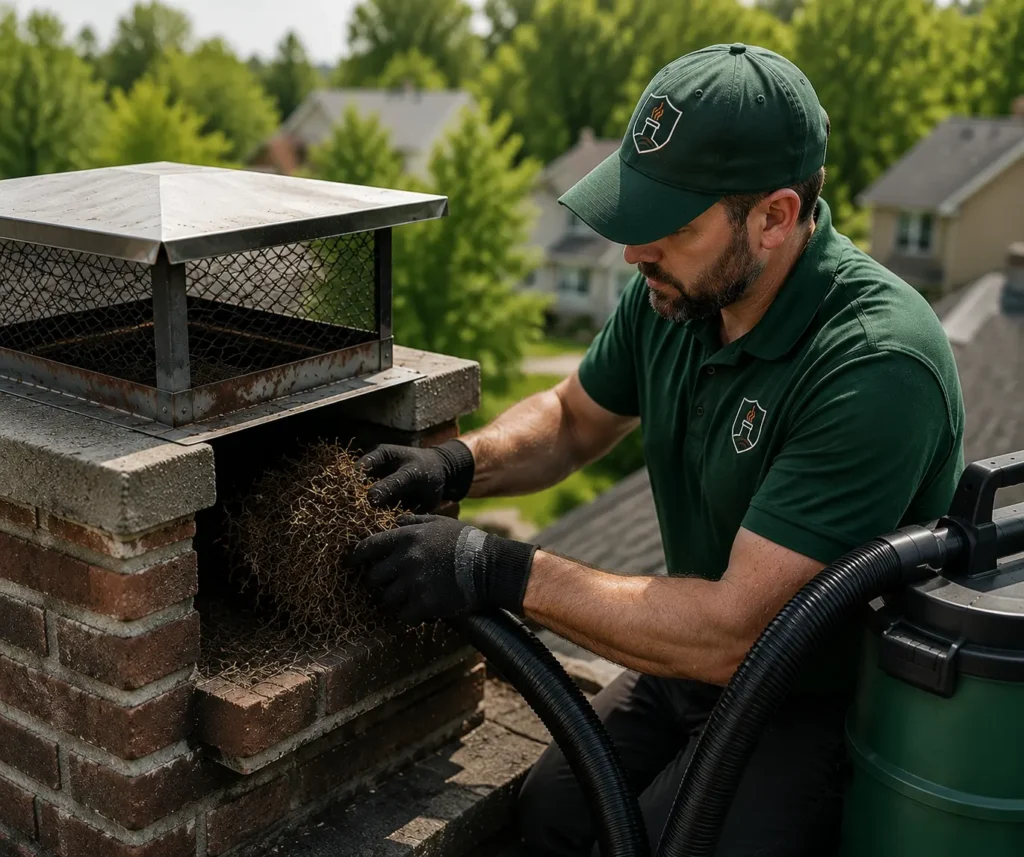
Scratching, fluttering, chirping, or scrabbling means something is living in there. Chimney swifts, starlings, squirrels and raccoons all use flues, and the material they bring in is what causes the blockage even after the animal has gone. That is the territory of animal nest and debris removal.
Debris in the firebox
Twigs, leaves, feathers, or masonry fragments appearing in the firebox came from somewhere above. Any of it is a reason to look up the flue rather than sweep the hearth and move on. Small pieces of clay tile are worth particular attention, since they indicate the liner itself is shedding material, which is a condition rather than a mess.
The draft test
There is a simple check you can do without lighting anything. Open the damper fully, hold a lit stick of incense or a smoking match near the fireplace opening, and watch which way the smoke travels. It should be drawn steadily up the flue. If it hangs in place or drifts into the room, the chimney is not moving air as it should. This does not tell you what the cause is, but it tells you there is one, and it is safer than finding out with a full fire.
Draft that changes with the weather
A flue that draws well on a cold, still day and poorly on a warm or windy one is behaving normally to a degree, since draft depends on the temperature difference between inside and out. What is not normal is a system that has become noticeably worse across the same conditions year over year. Comparing like with like is what makes the symptom meaningful, and it is worth noting when the trouble occurs rather than only that it does.
Visible obstruction at the top
From the ground you can sometimes see nesting material at the top or a cap that is packed with debris. A blocked cap restricts the same airflow as a blocked flue. Keeping it clear is part of routine chimney cap cleaning.
Stains or dampness around the fireplace
Discoloration on the wall near the chimney breast, or dampness after rain, often means water is getting in where it should not. Water and debris tend to arrive by the same route, which is usually a missing or damaged cap.
Carbon monoxide alarm activity
Treat this as urgent rather than diagnostic. A blocked flue can push combustion byproducts back into the living space, and carbon monoxide has no smell. If an alarm sounds, get everyone outside and call emergency services first. The U.S. Consumer Product Safety Commission carbon monoxide center has guidance every household with a fuel-burning appliance should read.
What causes blockages
- Animal nests, the most common cause in flues without a sound cap.
- Heavy creosote accumulation narrowing the flue over years of use.
- Leaves and windblown debris collecting at the top.
- Fallen masonry or liner fragments from an aging system.
- A cap packed solid with lint, leaves, or nesting material.
Why an unused chimney is not exempt
A flue nobody has lit in years is more likely to be blocked, not less. Nothing has been disturbing it, and animals prefer quiet. Homeowners who decide to use a long-dormant fireplace should have the system checked before the first fire rather than after.
What to do next
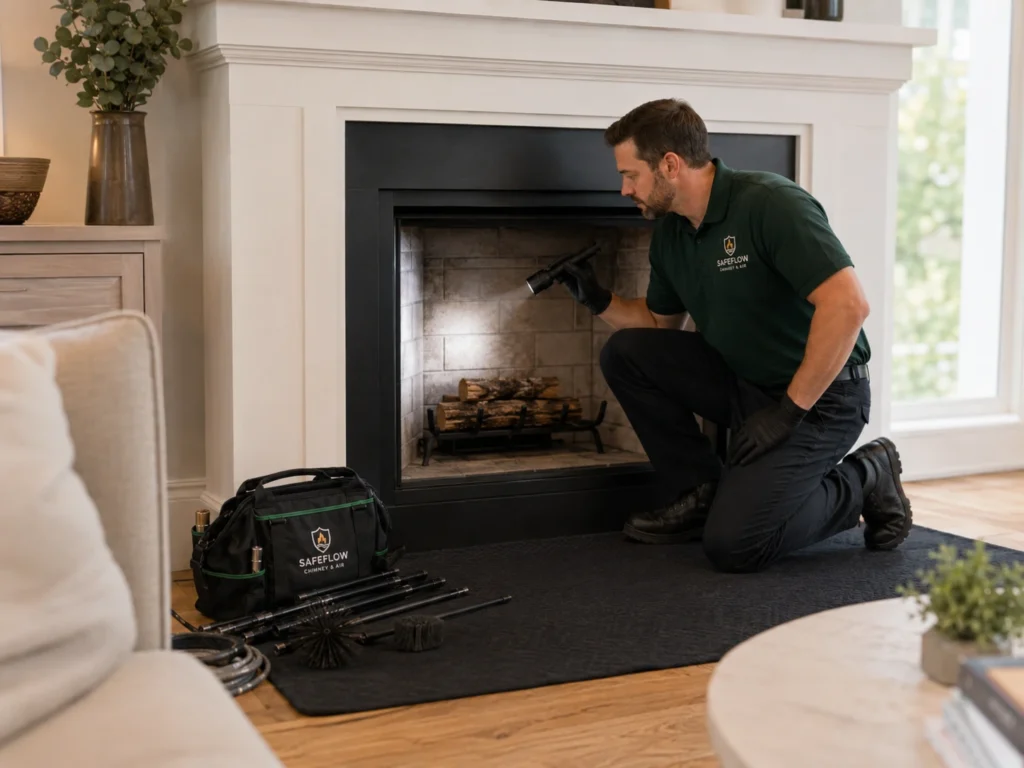
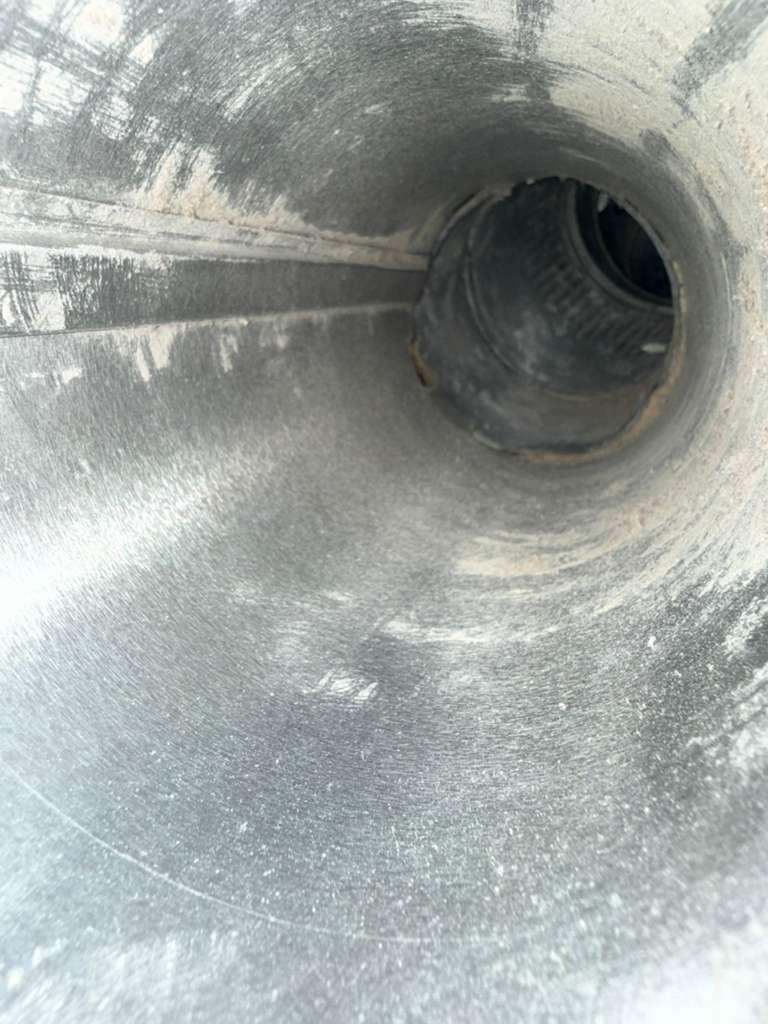
Do not light a fire to test whether the problem has resolved. A camera-assisted chimney inspection shows what is actually in the flue and where, which determines whether the answer is a straightforward chimney cleaning or debris removal first. If you want the distinction between the two services, we cover it in the difference between a sweep and an inspection. When you know what you are looking at, contact us and we will schedule accordingly.