
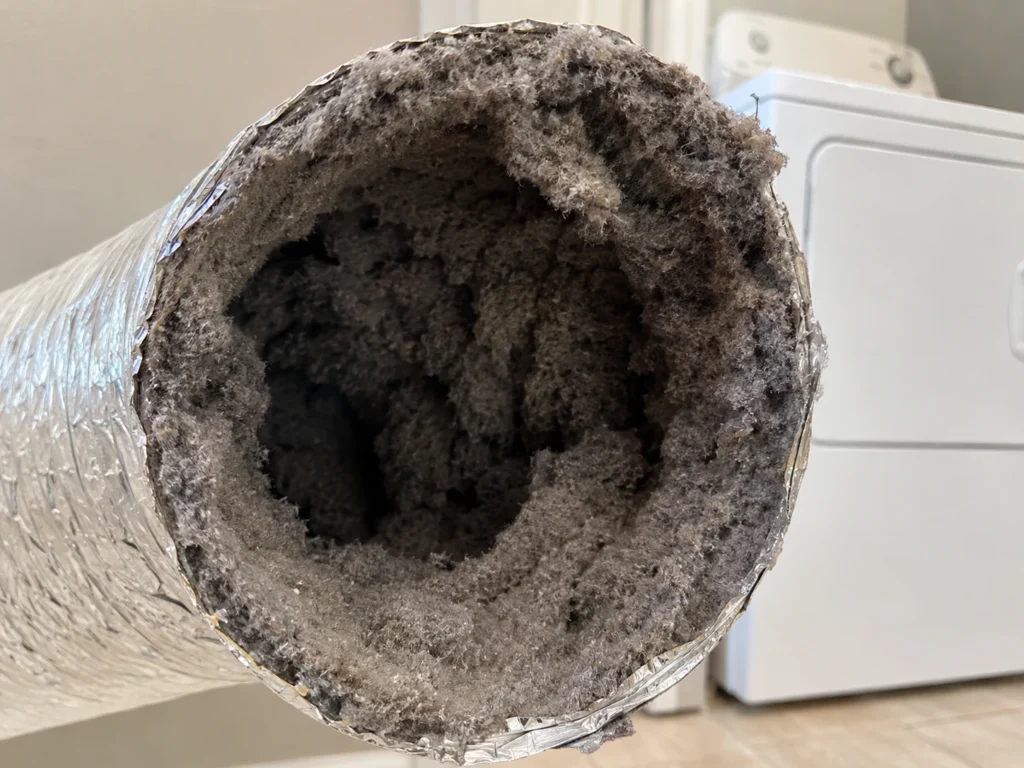



Few household annoyances are as common as pulling out a load that is still damp after a full cycle. Most of the time the dryer itself is fine. The problem is airflow, and the usual culprit is a clogged vent.
The most common reason: a clogged dryer vent
A dryer works by pulling in air, heating it, and pushing the moisture out through the exhaust vent. When that vent is clogged with lint, the moist air has nowhere to go. Clothes stay damp, the cycle runs longer, and the dryer works harder for a worse result.
How lint builds up and chokes airflow
The lint screen catches only part of what comes off your clothes. The rest travels into the vent line, where it settles and packs together over months and years. A little restriction becomes a lot, and airflow drops steadily until drying times noticeably climb.
Other causes to rule out
Before assuming the worst, rule out the simple things:
- Overloading the drum, which blocks air from moving through the clothes.
- A clogged lint screen that has not been cleared between loads.
- The wrong cycle or a low heat setting for a heavy load.
- A long or crushed vent hose behind the dryer.
If you have checked these and drying is still slow, the vent line itself is the likely cause.
Signs it is the vent, not the dryer
A few clues point to the vent: clothes that are hot but still damp at the end of a cycle, a dryer that feels very hot to the touch, a burning or musty smell, and little or no air coming from the exterior vent flap while the dryer runs. Our guide to the warning signs of a clogged dryer vent covers these in more detail.
Why this matters beyond convenience
Slow drying is not just frustrating. A restricted vent makes the dryer run longer and hotter, which uses more energy and wears the appliance faster. It also raises a real safety concern: the U.S. Fire Administration identifies failure to clean dryers as a leading factor in home dryer fires, because trapped lint is highly flammable.
The hidden cost of a slow dryer
A dryer that needs two cycles to finish a load uses roughly twice the energy for the same laundry, and that adds up over a year. The strain also shortens the life of the appliance, since the heating element and motor run far longer than they were designed to. In many homes, a single vent cleaning pays for itself in lower energy use and a dryer that lasts longer, before you even factor in the safety benefit.
What a professional dryer vent cleaning does
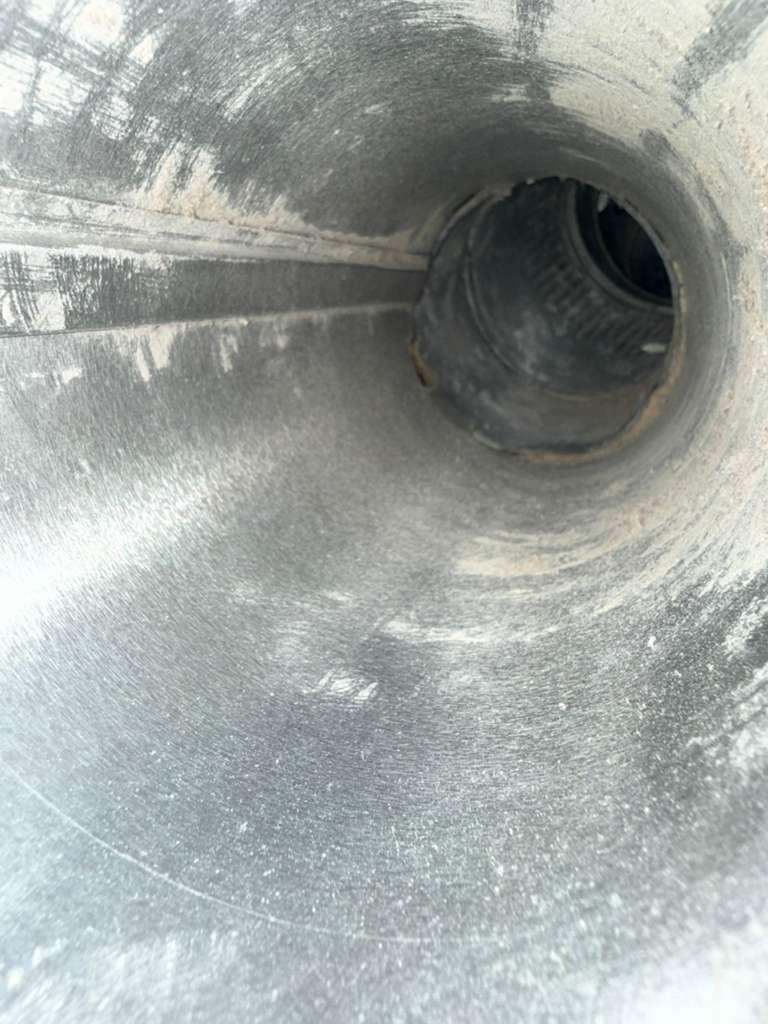
A professional dryer vent cleaning clears the full length of the exhaust line, not just the opening. Using specialized brushes and extraction, the technician removes the packed lint from the entire run and confirms that air is moving freely at the exterior vent. Removing the buildup restores airflow, so your dryer dries a load in one cycle again and runs cooler and more efficiently.
What you can check yourself first
Before you call anyone, a few quick checks are worth doing. Clear the lint screen and run a load to see if drying improves. Look behind the dryer to make sure the flexible hose is not crushed or kinked. Step outside while the dryer runs and hold your hand near the exterior vent flap; you should feel a steady stream of warm air. Weak or missing airflow there, even with a clean lint screen, points straight to a clogged vent line that needs professional attention.
How often to clean
Once a year is a sensible baseline for most homes, and more often for large households or homes with long vent runs. Our guide on how often to clean a dryer vent helps you judge the right interval for your home.
Maryland homes and long vent runs
Many homes across Montgomery and Prince George’s County, including Bowie, have long interior vent runs from an interior laundry room to an outside wall. The longer the run, the more places lint can settle, and the more a yearly cleaning pays off in faster, safer drying.